




Introduction
For decades, global supply chains have operated on a linear model where raw materials are extracted, transformed into products, consumed, and eventually discarded. While this approach fueled industrial growth, it also generated enormous waste, depleted natural resources, and increased environmental pressure.
Today, businesses are recognizing that long-term competitiveness depends not only on operational efficiency but also on responsible resource management. Customers expect sustainable products, governments are tightening environmental regulations, and investors are placing greater emphasis on Environmental, Social, and Governance (ESG) performance.
Circular supply chains address these challenges by keeping materials, products, and resources in use for as long as possible, reducing waste while maximizing value throughout the product lifecycle.


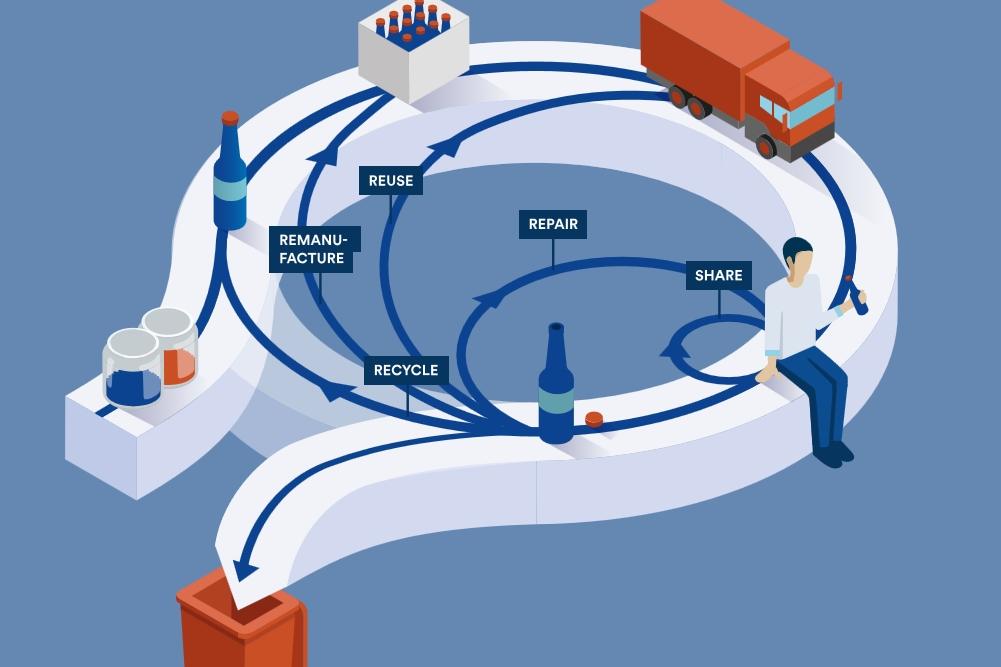
Figure 1: Circular supply chains extend product life through reuse, repair, remanufacturing, and recycling, creating a continuous value loop.
Understanding Circular Supply Chains
A circular supply chain replaces the traditional linear flow with a regenerative system where products and materials continuously circulate through the economy.
Instead of viewing products as disposable assets, organizations design them to be repaired, refurbished, remanufactured, or recycled after their initial use. Materials recovered from returned products become valuable inputs for new production, reducing dependence on virgin resources.
This approach minimizes landfill waste, lowers raw material consumption, and supports long-term sustainability objectives without compromising business growth.
The Core Principles of Circularity
Successful circular supply chains are built around several key principles.
Design for Longevity: Products are designed to last longer, making maintenance, upgrades, and repairs easier.
Reuse and Refurbishment: Products that reach the end of one customer’s lifecycle can often be restored and reintroduced into the market.
Remanufacturing: Components from returned products are recovered, inspected, and rebuilt to original performance standards.
Recycling: Materials that cannot be reused are processed and converted into raw materials for future manufacturing.
Waste Elimination: Every stage of the supply chain is evaluated to reduce unnecessary packaging, material losses, and inefficient resource utilization.
These principles help businesses reduce environmental impact while creating new revenue opportunities.
Technology Driving Circular Supply Chains
Digital technologies are making circular supply chains more practical and scalable.
Artificial Intelligence (AI): AI predicts product lifecycles, optimizes reverse logistics, and identifies opportunities for material recovery.
Internet of Things (IoT): Smart sensors monitor product usage and condition, enabling predictive maintenance and extending product life.
Blockchain: Blockchain provides transparent records of product origin, ownership, maintenance history, and material composition, supporting efficient reuse and recycling.
Digital Twins: Virtual product models simulate lifecycle performance and help optimize repair, refurbishment, and recycling strategies before physical implementation.
Together, these technologies provide the visibility needed to manage products throughout their entire lifecycle rather than only until delivery.
Business Benefits Beyond Sustainability
Circular supply chains create value that extends well beyond environmental responsibility.
Organizations adopting circular practices often experience:
- Reduced raw material costs through resource recovery.
- Lower waste disposal expenses.
- Improved supply chain resilience by reducing dependence on scarce materials.
- Stronger compliance with environmental regulations.
- Enhanced customer loyalty through sustainable business practices.
- New revenue streams from refurbished products and recovered materials.
Rather than treating sustainability as a cost, businesses increasingly view circularity as a driver of innovation and long-term profitability.
Challenges to Circular Transformation
Transitioning to a circular supply chain requires significant organizational change.
Common challenges include:
- Redesigning products for repairability and recyclability.
- Developing efficient reverse logistics networks.
- Encouraging customer participation in product return programs.
- Integrating lifecycle tracking into existing ERP and supply chain systems.
- Collaborating closely with suppliers and recycling partners.
Organizations that successfully overcome these barriers position themselves for greater resilience and long-term competitiveness.
The Future of Zero-Waste Supply Chains
The future of supply chain management lies in creating systems where waste becomes a valuable resource rather than an inevitable outcome.
Advances in AI, robotics, renewable energy, automation, and advanced recycling technologies will enable businesses to recover more materials, reduce emissions, and operate increasingly closed-loop supply chains.
Circularity will become an essential performance indicator alongside cost, quality, and delivery. Organizations that embrace this transition early will not only reduce environmental impact but also strengthen profitability, resource security, and customer trust.
Key Takeaways
| Linear Supply Chain | Circular Supply Chain |
|---|---|
| Extract–Produce–Dispose | Design–Use–Recover–Reuse |
| High raw material dependency | Resource recovery and reuse |
| End-of-life waste | Closed-loop material lifecycle |
| One-way product flow | Continuous product circulation |
| Waste management | Waste elimination |
| Cost-focused operations | Value-focused sustainability |
Conclusion
Circular supply chains represent one of the most significant transformations in modern Supply Chain Management. By rethinking how products are designed, used, recovered, and regenerated, organizations can reduce waste while creating long-term economic and environmental value.
Technology is accelerating this transition by enabling greater visibility, smarter resource management, and more efficient reverse logistics. As sustainability becomes central to business strategy, circular supply chains will play a vital role in helping organizations achieve zero-waste ambitions without compromising operational performance.
The future belongs to businesses that view waste not as an unavoidable by-product, but as an opportunity to create new value. By embracing circularity today, organizations can build supply chains that are more resilient, resource-efficient, and prepared for the challenges of tomorrow.