




Introduction
The supply chain industry is experiencing one of the most significant transformations in its history. Global disruptions, evolving customer expectations, geopolitical uncertainties, climate-related risks, and rapid technological advancements have forced organizations to rethink traditional supply chain models.
Today’s leading organizations are no longer focusing solely on reducing costs—they are building intelligent, connected, and resilient supply chains capable of responding to disruptions in real time. Technologies such as Artificial Intelligence (AI), automation, predictive analytics, cloud computing, and the Internet of Things (IoT) are fundamentally reshaping how businesses procure, manufacture, store, transport, and deliver products.
Organizations that embrace these innovations will be better positioned to improve operational efficiency, reduce costs, enhance customer satisfaction, and maintain a competitive advantage.
1. Artificial Intelligence (AI): The New Supply Chain Brain
Artificial Intelligence has evolved from a futuristic concept into a strategic business necessity. Modern AI platforms are capable of analyzing millions of data points to optimize operations, automate repetitive tasks, and support faster decision-making.
AI is now being used for:
- Demand forecasting
- Inventory optimization
- Supplier performance analysis
- Route optimization
- Predictive maintenance
- Procurement automation
- Risk identification
- Automated report generation
Generative AI has further expanded these capabilities by enabling organizations to create procurement documents, summarize contracts, generate management reports, and answer operational queries instantly.
Key Benefits
- Improved forecast accuracy
- Lower inventory carrying costs
- Faster procurement cycles
- Reduced operational risks
- Better decision-making
2. End-to-End Supply Chain Visibility
One of the biggest lessons learned from recent global disruptions is the importance of complete visibility across the supply chain.
Organizations now demand real-time information across every stage—from suppliers and manufacturing plants to warehouses, transportation networks, and customers.
Modern visibility platforms integrate multiple systems into a single dashboard, enabling managers to monitor operations and respond proactively.
Technologies Driving Visibility
- Internet of Things (IoT)
- RFID Tags
- GPS Tracking
- Warehouse Management Systems (WMS)
- Transportation Management Systems (TMS)
- Enterprise Resource Planning (ERP)
- Cloud Platforms
Business Impact
- Faster response to disruptions
- Improved customer service
- Reduced inventory losses
- Better planning and forecasting
3. Predictive Analytics: From Reactive to Proactive Operations
Traditional supply chains responded to problems after they occurred. Today’s organizations use predictive analytics to anticipate disruptions before they impact operations.
By analyzing historical data, weather forecasts, supplier performance, market trends, and transportation data, businesses can proactively mitigate risks.
Predictive analytics helps answer questions such as:
- Which supplier is likely to miss delivery commitments?
- Which warehouse may experience congestion?
- Which products are expected to see increased demand?
- Where should additional inventory be positioned?
The result is faster decision-making and reduced business risk.
4. Digital Twins: Simulating the Future
A Digital Twin is a virtual representation of a physical supply chain.
Organizations use Digital Twins to simulate operational scenarios before implementing changes.
Examples
- Port closures
- Labor shortages
- Demand surges
- Transportation delays
- Supplier disruptions
- Warehouse expansion
This allows leadership teams to evaluate multiple scenarios and prepare contingency plans without disrupting live operations.
5. Sustainability is Now a Strategic Priority
Sustainability has moved beyond compliance and corporate social responsibility—it has become a key driver of competitive advantage.
Customers, investors, and governments increasingly expect organizations to reduce their environmental impact.
Key Sustainability Initiatives
- Carbon footprint monitoring
- Electric transportation fleets
- Renewable energy warehouses
- Sustainable packaging
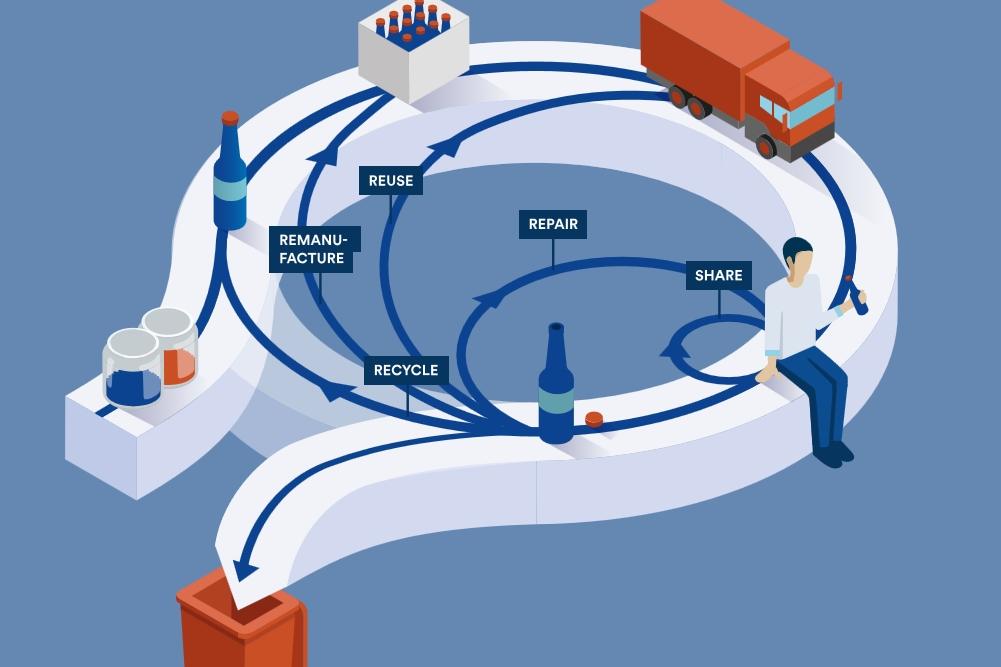
- Circular supply chains
- Waste reduction
- Energy-efficient operations
Organizations that embed sustainability into their supply chain strategy often benefit from lower operating costs, stronger brand reputation, and improved regulatory compliance.
6. Warehouse Automation is Accelerating
Modern warehouses are becoming highly automated to improve efficiency, accuracy, and safety.
Common Automation Technologies
- Autonomous Mobile Robots (AMRs)
- Automated Guided Vehicles (AGVs)
- Robotic palletizers
- Conveyor automation
- Automated sorting systems
- Drone-based inventory counting
- AI-powered quality inspection
Automation reduces manual effort while significantly improving productivity and operational consistency.
7. Supply Chain Cybersecurity
As supply chains become increasingly digital, cybersecurity has become a boardroom priority.
Organizations must protect:
- ERP systems
- Supplier portals
- Customer information
- Warehouse automation
- Transportation systems
- Cloud infrastructure
Leading organizations are implementing:
- Zero Trust Architecture
- Multi-Factor Authentication (MFA)
- Continuous monitoring
- Endpoint security
- Cybersecurity awareness training
Strong cybersecurity is now essential for maintaining operational continuity.
8. Multi-Sourcing and Supply Chain Diversification
The risks associated with depending on a single supplier have become increasingly apparent.
Organizations are adopting diversified sourcing strategies, including:
- Multi-sourcing
- Nearshoring
- Regional sourcing
- Local manufacturing
- Strategic supplier partnerships
Diversification improves resilience and reduces exposure to geopolitical and logistical risks.
9. Hyperautomation Across Operations
Hyperautomation combines Artificial Intelligence, Robotic Process Automation (RPA), workflow automation, and analytics to eliminate repetitive manual tasks.
Processes Being Automated
- Purchase Order Creation
- Invoice Processing
- Vendor Onboarding
- Shipment Notifications
- Inventory Reconciliation
- Compliance Reporting
- Document Management
Employees can focus on higher-value strategic activities while automation handles routine administrative work.
10. Cloud-Based ERP Systems
Legacy systems are gradually being replaced by cloud-native ERP platforms that connect every business function into one integrated ecosystem.
These platforms typically integrate:
- Procurement
- Inventory Management
- Finance
- Warehouse Operations
- Transportation
- Sales
- Analytics
Advantages
- Real-time collaboration
- Faster implementation
- Automatic software updates
- Improved scalability
- Enhanced security
- Lower infrastructure costs
Cloud ERP has become the foundation of modern digital supply chains.
11. Data-Driven Performance Management
Modern supply chains generate vast amounts of operational data. Business Intelligence (BI) platforms convert this data into actionable insights through real-time dashboards and performance metrics.
Common Supply Chain KPIs
| KPI | Purpose |
|---|---|
| Inventory Turnover | Measures inventory efficiency |
| Fill Rate | Customer order fulfillment |
| On-Time In-Full (OTIF) | Delivery performance |
| Forecast Accuracy | Planning effectiveness |
| Warehouse Utilization | Storage optimization |
| Supplier Performance | Vendor reliability |
| Transportation Cost | Logistics efficiency |
| Perfect Order Rate | End-to-end service quality |
Organizations using real-time analytics consistently make faster and better-informed decisions.
12. The Human Element Remains Critical
While technology continues to transform supply chains, people remain at the center of successful operations.
Future supply chain professionals will require a combination of technical expertise and leadership skills.
Essential Skills for the Future
- Data Analytics
- Artificial Intelligence
- Supply Chain Planning
- Strategic Sourcing
- Risk Management
- Digital Transformation
- Leadership
- Change Management
- Sustainability
- Financial Acumen
Organizations that invest equally in technology and talent development will achieve the greatest long-term success.
Key Takeaways
- AI is transforming supply chain decision-making.
- End-to-end visibility enables proactive operations.
- Predictive analytics helps organizations anticipate disruptions.
- Automation is improving warehouse productivity and operational efficiency.
- Sustainability has become a strategic business priority.
- Cloud ERP platforms are replacing traditional legacy systems.
- Cybersecurity is critical in an increasingly digital supply chain.
- Multi-sourcing improves resilience against global disruptions.
- Data-driven performance management supports continuous improvement.
- Skilled professionals remain the foundation of supply chain excellence.
Conclusion
The future of supply chain management lies in creating intelligent, connected, resilient, and sustainable ecosystems. Organizations can no longer rely on traditional operating models to remain competitive in an environment characterized by uncertainty and rapid change.
Artificial Intelligence, predictive analytics, automation, cloud computing, and digital collaboration are reshaping every aspect of the supply chain—from procurement and manufacturing to warehousing, transportation, and customer delivery.
However, technology alone is not enough. Long-term success will depend on an organization’s ability to combine digital innovation with strong governance, agile decision-making, strategic supplier partnerships, and a highly skilled workforce.
The supply chains that will thrive in the years ahead will not necessarily be the largest or the least expensive. They will be the ones that are most agile, data-driven, customer-centric, and resilient—capable of adapting quickly, innovating continuously, and delivering value in an increasingly interconnected world.