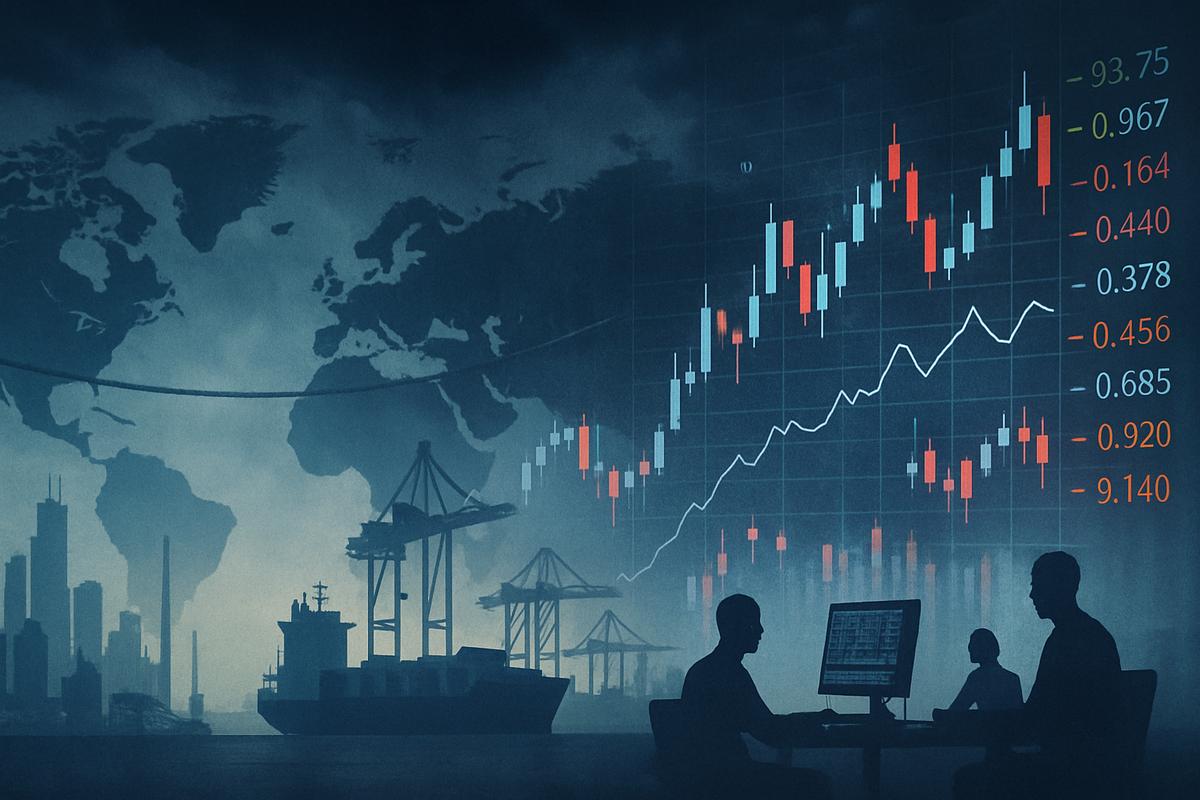





“The strongest supply chains are no longer built on scale alone—they are built on intelligence, resilience, and the ability to adapt before disruption becomes reality.”
Introduction
The Middle East has always occupied a unique position in the global economy, serving as the bridge between Europe, Asia, and Africa. Today, however, the region has become much more than an energy hub—it is the epicenter of some of the world’s most critical maritime trade routes. Recent geopolitical tensions involving the Red Sea, the Strait of Hormuz, Israel, Iran, and surrounding nations have transformed the region into one of the most closely watched supply chain hotspots.
Nearly every multinational organization, shipping company, manufacturer, and procurement leader now monitors developments in the Middle East because disruptions in the region can trigger immediate increases in freight costs, shipping delays, insurance premiums, and energy prices across the globe.
This article explores how regional conflicts are reshaping global supply chains, forcing businesses to rethink sourcing strategies, logistics networks, inventory planning, and long-term investment decisions.


Historical Context
The Middle East has been a strategic crossroads of commerce for thousands of years. Ancient trade caravans once crossed the region carrying spices, silk, precious metals, and textiles between Asia and Europe. Today, those same trade corridors have evolved into some of the busiest maritime routes on Earth.
Over the past several decades, geopolitical tensions involving Israel, Iran, Saudi Arabia, Yemen, Syria, and other regional actors have periodically disrupted trade and energy markets. More recently, attacks on commercial vessels in the Red Sea, heightened security concerns around the Strait of Hormuz, and regional military escalations have demonstrated how quickly localized conflicts can become global economic challenges.
As global supply chains have become increasingly interconnected, even temporary disruptions in these waterways now affect manufacturers, retailers, commodity traders, and consumers thousands of kilometers away.
“In today’s interconnected economy, a disruption in one shipping lane can echo across every continent.”
Why the Middle East Matters to Global Supply Chains
The Middle East is home to several of the world’s most strategically important maritime chokepoints. Every day, thousands of cargo vessels carrying oil, liquefied natural gas (LNG), containerized goods, food products, chemicals, and industrial equipment transit these narrow waterways.
Key Strategic Trade Corridors
| Trade Corridor | Global Importance |
|---|---|
| Strait of Hormuz | Carries approximately one-fifth of global oil exports |
| Bab el-Mandeb Strait | Gateway connecting the Red Sea to the Indian Ocean |
| Suez Canal | One of the world’s busiest maritime trade corridors connecting Asia and Europe |
| Red Sea Shipping Lane | Critical route for container shipping and energy transportation |
Any disruption across these corridors immediately impacts shipping schedules, transportation costs, fuel prices, and global supply chain reliability.
Economic Impact on Global Trade
Regional instability has significantly increased operational costs for businesses worldwide. Shipping companies have been forced to reroute vessels around the Cape of Good Hope to avoid high-risk areas, extending transit times by several days or even weeks.
These longer routes increase:
- Fuel consumption
- Freight charges
- Marine insurance premiums
- Inventory carrying costs
- Carbon emissions
- Delivery lead times
Estimated Impact on Global Logistics
| Indicator | Before Major Disruptions | Current Environment |
|---|---|---|
| Average Transit Time (Asia-Europe) | 25–30 Days | 35–45 Days |
| Marine Insurance Premium | Standard Rates | Significantly Higher |
| Shipping Distance | Standard Route | Up to 40% Longer (via Cape of Good Hope) |
| Inventory Requirements | Lean Inventory | Higher Safety Stock |
Businesses are increasingly prioritizing supply chain resilience over traditional cost optimization.
Energy Security and Global Markets
The Middle East remains central to global energy security. A significant portion of the world’s crude oil and LNG exports passes through regional shipping corridors.
When geopolitical tensions rise, energy markets respond almost immediately. Even the possibility of disruptions can drive volatility in oil prices, affecting transportation, manufacturing, agriculture, aviation, and consumer goods.
For supply chain leaders, higher fuel prices translate directly into increased logistics costs and compressed profit margins.
The Rise of Supply Chain Diversification
One of the most significant lessons emerging from recent events is the danger of relying on a single trade corridor or supplier base.
Organizations are actively diversifying their supply chains through:
- Multi-country sourcing
- Nearshoring
- Regional manufacturing hubs
- Supplier redundancy
- Strategic inventory buffers
- Alternative shipping routes
Rather than pursuing the lowest possible cost, businesses are now investing in resilience and continuity.
Technology as the New Risk Mitigator
Modern supply chains are increasingly supported by digital technologies capable of identifying disruptions before they escalate.
Leading organizations are adopting:
- Artificial Intelligence for demand forecasting
- Predictive analytics for disruption management
- Digital Twins for scenario planning
- Internet of Things (IoT) tracking
- Real-time shipment visibility
- Cloud-based control towers
These technologies enable companies to respond proactively rather than reactively.
The Gulf’s Emerging Role as a Global Logistics Hub
While conflict has created uncertainty, several Gulf nations continue to invest heavily in logistics infrastructure, ports, free trade zones, and digital supply chain ecosystems.
Countries such as the United Arab Emirates and Saudi Arabia are positioning themselves as global logistics gateways through investments in:
- Smart ports
- Integrated logistics parks
- Automated warehouses
- Rail connectivity
- Digital customs systems
- Economic diversification initiatives
These investments are expected to reshape regional supply chains over the coming decade.

Strategic Recommendations for Businesses
Organizations can no longer assume that global trade routes will remain stable. Executive teams should consider a proactive approach to supply chain resilience.
Recommended Actions
| Strategic Priority | Business Benefit |
|---|---|
| Diversify Suppliers | Reduce dependency on single-source procurement |
| Strengthen Risk Monitoring | Improve response to geopolitical events |
| Increase Supply Chain Visibility | Enable faster operational decisions |
| Invest in AI & Predictive Analytics | Anticipate disruptions before they occur |
| Review Inventory Policies | Balance resilience with working capital |
| Develop Contingency Plans | Improve business continuity |
Organizations that embed resilience into their operations will be better equipped to navigate future disruptions.
Global Geopolitical Realignment
The evolving situation in the Middle East is also reshaping international trade partnerships and investment strategies.
Governments are strengthening economic alliances, negotiating new trade agreements, investing in alternative transport corridors, and encouraging domestic manufacturing in critical industries.
Businesses are following a similar path by reassessing supplier networks, evaluating geopolitical exposure, and incorporating risk management into strategic planning.
Supply chains have become an integral component of national economic security.
Conclusion: Building the Supply Chains of Tomorrow
The Middle East is no longer viewed solely through the lens of energy production. It has become one of the defining regions influencing global supply chain resilience, international trade, and economic strategy.
Regional conflicts have demonstrated that supply chains built exclusively for efficiency are vulnerable to geopolitical shocks. The future belongs to organizations that can balance efficiency with flexibility, diversify sourcing, embrace digital transformation, and build resilient logistics networks capable of adapting to uncertainty.
For supply chain leaders, the lesson is clear: resilience is no longer a competitive advantage—it is a business necessity. As geopolitical dynamics continue to evolve, organizations that invest in visibility, collaboration, technology, and strategic risk management will be best positioned to thrive in an increasingly interconnected and unpredictable global economy.
“The future of supply chain management isn’t about moving goods faster—it’s about moving information smarter, decisions quicker, and businesses forward with resilience.”