

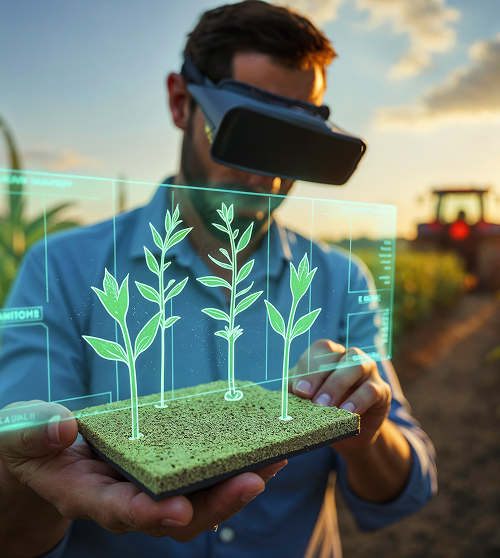

Introduction: A Virtual Copy with Real Business Impact
Every operational decision carries some degree of uncertainty. Should production be increased? Can warehouse capacity handle seasonal demand? What happens if a supplier misses a shipment? Will a change in transportation routes improve delivery performance?
Traditionally, businesses answered these questions through historical analysis, pilot projects, or costly trial-and-error approaches.
Digital Twins are changing that equation.
A Digital Twin is a dynamic virtual representation of a physical asset, process, facility, or entire supply chain. Connected through real-time data from sensors, enterprise systems, and operational platforms, it continuously reflects the current state of its physical counterpart.
This allows organizations to test decisions virtually before implementing them in reality—reducing risk while improving confidence and speed.
What Makes a Digital Twin Different?
Unlike conventional dashboards that simply display operational data, Digital Twins create an interactive environment where businesses can simulate future scenarios.
Instead of asking:
“What happened yesterday?”
Organizations begin asking:
- What will happen tomorrow?
- What happens if demand increases by 25%?
- Which warehouse configuration maximizes throughput?
- Which supplier disruption would have the biggest operational impact?
- How can transportation costs be minimized without affecting service?
This shift transforms operations from reactive management to predictive decision-making.

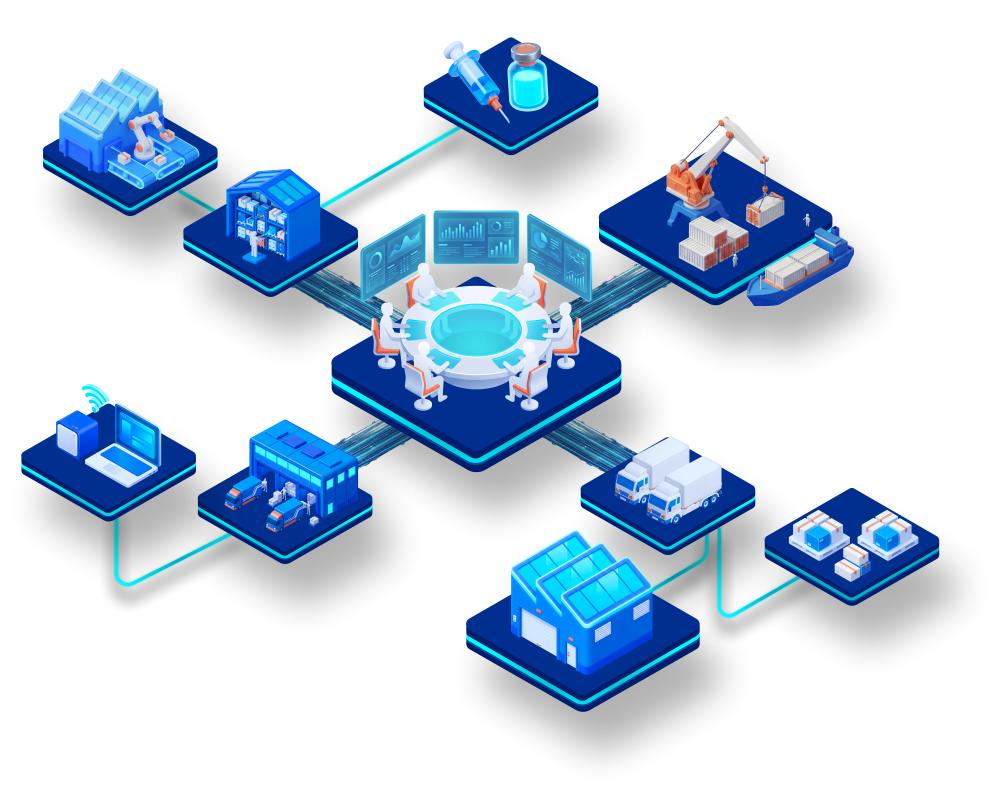
Figure 1: Digital Twins enable operations teams to simulate production, logistics, inventory, and resource allocation before executing changes in the physical world.
Where Digital Twins Are Creating Value
Production Planning
Manufacturers use Digital Twins to simulate production schedules, identify bottlenecks, optimize machine utilization, and improve production sequencing without interrupting ongoing operations.
Warehouse Optimization
Warehouse managers can virtually redesign storage layouts, evaluate picking routes, test automation strategies, and estimate throughput improvements before making physical modifications.
Supply Chain Scenario Planning
Organizations simulate supplier failures, transportation delays, inventory shortages, and demand fluctuations to determine the most effective contingency plans.
Instead of reacting after disruptions occur, businesses prepare for multiple possibilities in advance.
Predictive Maintenance
By integrating IoT sensors with Digital Twins, organizations monitor equipment health continuously.
The system detects abnormal operating conditions and predicts failures before breakdowns occur, minimizing downtime and reducing maintenance costs.
Capacity Planning
Digital Twins help leaders evaluate expansion strategies by modelling future demand, labour availability, equipment utilization, and facility constraints.
This improves capital investment decisions while reducing implementation risk.
The Technology Behind Digital Twins
Digital Twins combine several advanced technologies into one intelligent ecosystem.
These include:
- Artificial Intelligence (AI)
- Machine Learning (ML)
- Internet of Things (IoT)
- Cloud Computing
- Big Data Analytics
- 3D Modelling
- Edge Computing
Together, these technologies continuously collect operational data, update virtual models, analyse potential outcomes, and recommend optimal actions.
The result is a living operational model that evolves alongside the business.
Benefits Beyond Operational Efficiency
The value of Digital Twins extends well beyond process optimization.
Organizations implementing Digital Twin technology are experiencing:
- Better operational visibility
- Faster strategic planning
- Reduced downtime
- Improved inventory optimization
- Higher equipment utilization
- Lower operational risk
- More accurate forecasting
- Faster decision-making
- Reduced implementation costs for operational changes
Perhaps the greatest advantage is confidence.
Leaders can validate decisions virtually before committing resources in the real world.
Challenges to Adoption
Despite its enormous potential, implementing Digital Twins is not without challenges.
Organizations often encounter obstacles such as fragmented data, legacy systems, inconsistent IoT connectivity, cybersecurity concerns, and limited digital capabilities.
Success depends not only on technology investments but also on high-quality data, cross-functional collaboration, and a culture that embraces data-driven decision-making.
Digital Twins are most effective when they become an integral part of daily operational planning rather than a standalone technology initiative.
The Future of Intelligent Operations
As Artificial Intelligence continues to mature, Digital Twins will evolve from simulation platforms into autonomous operational advisors.
Future systems will continuously evaluate thousands of operational variables, recommend corrective actions, automatically optimize production schedules, and even initiate predefined responses without manual intervention.
Eventually, organizations will operate living digital ecosystems where planning and execution occur simultaneously through continuous learning and real-time optimization.
Key Insights at a Glance
| Traditional Planning | Digital Twin-Enabled Planning |
|---|---|
| Historical reports | Real-time operational models |
| Trial-and-error implementation | Virtual simulation before execution |
| Reactive problem solving | Predictive scenario planning |
| Static operational plans | Continuously updated models |
| Manual decision support | AI-assisted optimization |
| Limited operational visibility | End-to-end digital transparency |
Conclusion
Digital Twins are redefining how organizations plan, execute, and improve operations. By creating virtual replicas of physical assets and processes, businesses can experiment, optimize, and predict outcomes without disrupting ongoing operations.
As supply chains become more complex and customer expectations continue to rise, organizations require technologies that enable faster, smarter, and more confident decision-making. Digital Twins provide exactly that capability.
In the coming years, they will move beyond being an innovation reserved for large manufacturers and become a core component of intelligent operations across industries. Businesses that embrace Digital Twin technology today will be better positioned to improve efficiency, strengthen resilience, and compete in an increasingly digital economy.