



Executive Summary
For decades, supply chains were engineered with one primary objective—minimizing costs. Organizations optimized sourcing, reduced inventory, consolidated suppliers, and streamlined operations to maximize profitability. While this model proved highly effective during periods of stability, recent global disruptions have exposed its limitations. Today, supply chain leaders are shifting their focus from cost efficiency alone to building resilient networks capable of withstanding uncertainty. The future of Supply Chain Management lies in striking the right balance between operational efficiency, agility, and long-term resilience.
Introduction
The global business landscape has undergone a dramatic transformation over the last few years. The COVID-19 pandemic, geopolitical tensions, climate-related disruptions, cyber threats, and volatile customer demand have demonstrated that the lowest-cost supply chain is not always the strongest one.
Many organizations that depended on single-source suppliers or highly optimized just-in-time inventory models found themselves struggling to maintain business continuity when disruptions occurred. As a result, resilience has become a boardroom priority, influencing decisions around sourcing, logistics, inventory, technology, and supplier collaboration.
Rather than asking “How can we reduce costs further?”, businesses are increasingly asking “How can we continue operating when the unexpected happens?”

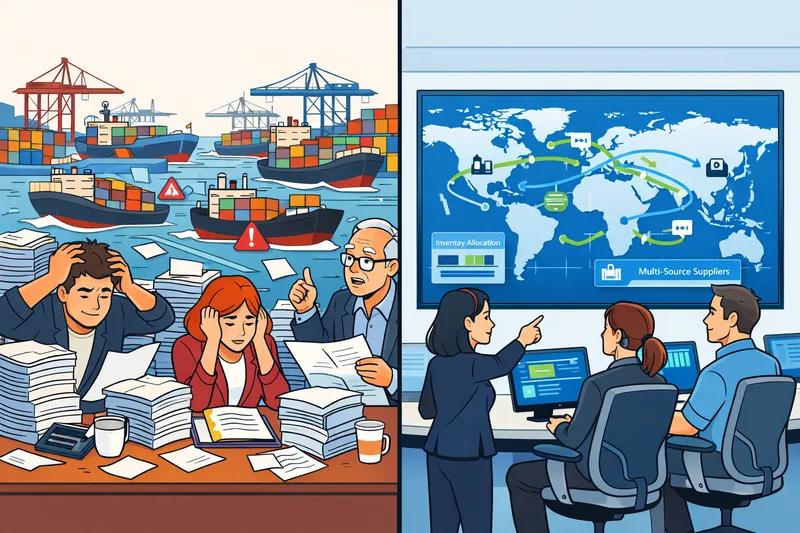
Figure 1: Modern supply chains are shifting from cost optimization alone to balancing efficiency with resilience, flexibility, and long-term continuity.
Why the Traditional Cost-Centric Model Is Evolving
For years, businesses achieved competitive advantage through lean operations, centralized manufacturing, global sourcing, and reduced inventory levels. These strategies lowered operating costs and improved profitability during predictable market conditions.
However, today’s supply chains face increasingly frequent disruptions. Port congestion, trade restrictions, supplier failures, transportation delays, and sudden shifts in customer demand have shown that highly optimized supply chains often lack the flexibility to recover quickly.
This realization has encouraged organizations to rethink how supply chains should be designed—not only for efficiency but also for resilience.
The Characteristics of a Resilient Supply Chain
A resilience-focused supply chain is designed to anticipate, absorb, adapt to, and recover from disruptions while maintaining service continuity.
Key characteristics include:
Diversified Supplier Networks: Organizations reduce dependence on single suppliers or regions by building multi-source procurement strategies.
Strategic Inventory Planning: Instead of minimizing inventory at all costs, businesses maintain optimized safety stocks for critical products and materials.
Regional Manufacturing: Nearshoring and regional production facilities reduce transportation risks and improve responsiveness to changing market conditions.
Digital Supply Chain Visibility: AI-powered control towers, IoT devices, and predictive analytics provide real-time visibility across procurement, logistics, warehousing, and distribution.
Scenario Planning: Businesses regularly simulate disruption scenarios to test contingency plans and strengthen operational preparedness.
Together, these capabilities create supply chains that are agile without sacrificing efficiency.
Technology Driving the Transformation
Technology has become the backbone of resilient supply chains.
Artificial Intelligence enables organizations to predict supplier disruptions, optimize inventory, and recommend corrective actions before problems escalate.
Machine Learning continuously analyzes supplier performance, transportation data, weather conditions, and external market signals to identify emerging risks.
Digital Twins allow businesses to simulate different operational scenarios and evaluate alternative strategies before implementing changes.
Cloud-based collaboration platforms improve communication between suppliers, logistics providers, manufacturers, and customers, enabling faster responses during periods of uncertainty.
Technology transforms resilience from reactive crisis management into proactive business planning.
Finding the Right Balance
Becoming resilience-focused does not mean abandoning cost discipline.
Instead, successful organizations evaluate decisions using a broader perspective that includes:
- Business continuity
- Customer service levels
- Supply security
- Risk exposure
- Long-term profitability
- Operational flexibility
In many cases, modest investments in diversified sourcing or additional inventory can prevent significantly larger financial losses caused by prolonged disruptions.
The objective is not to eliminate risk entirely but to ensure the organization can continue operating effectively despite uncertainty.
The Leadership Perspective
Supply chain resilience is no longer solely an operational responsibility—it has become a strategic leadership priority.
Executives increasingly evaluate supply chain performance using resilience indicators such as supplier diversification, recovery time, inventory availability, and operational adaptability alongside traditional financial metrics.
Organizations that embed resilience into corporate strategy are better positioned to respond confidently to changing market conditions while maintaining customer trust and competitive advantage.
Key Takeaways
| Cost-Centric Supply Chain | Resilience-Focused Supply Chain |
|---|---|
| Lowest-cost sourcing | Multi-source procurement strategy |
| Lean inventory | Strategic safety stock |
| Single-region manufacturing | Regional and diversified operations |
| Reactive disruption response | Predictive risk management |
| Cost optimization | Balanced cost and resilience |
| Efficiency-first mindset | Continuity-first mindset |
Conclusion
The future of Supply Chain Management is not about choosing between efficiency and resilience—it is about integrating both into a balanced operating model.
Organizations that continue to focus exclusively on cost reduction risk exposing themselves to greater operational disruptions and financial uncertainty. Those that invest in diversified sourcing, digital visibility, predictive analytics, and agile operating models will be better equipped to navigate future challenges while maintaining sustainable growth.
As global markets become increasingly interconnected and unpredictable, competitive advantage will belong to organizations that build supply chains capable of adapting, recovering, and thriving—regardless of the challenges ahead.